Showing posts with label Japan. Show all posts

Sunday, October 21, 2018

Assorted Stuff

Hey, I remember these...

Transparent strips under the protective paper covers
Once held a plastic rain bonnet—
Another anti-rain measure from back in the day—

Who knew raincoats could send wishes?

Found this a couple years ago, but my mother had an identical one—

When I grew up there were always these kind of giveaways around the house.

As familiar as this is, though, I hadn't noticed until now that the foil paper is a type also used for origami.

As with other origami papers, traditional motifs come from textile designs. Spider web pattern above; hemp leaf here—

The second is inside this find of J's—

Monday, May 28, 2018

Thrift Shop Day

Pictures from the holiday half-price sale, at the Parent-Teacher Organization's shop. While the shop is there to raise funds for student activities, it is itself a highly educational experience.

For instance, before today's visit I would not have known either this object (filter paper for chemical tests), or the 19th century scientist endorsing the brand.

Finding Berzelius' actual endorsement would no doubt take real research, but here are prices from a 1903 lab supply catalog, published in St. Louis.

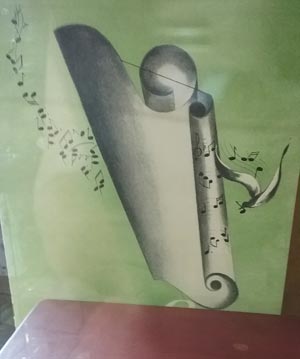
Program notes from a Philadelphia Orchestra concert.
This was in a locked case, and the place was way too busy to bother having it opened. Going by art style, the program is probably from the 1940s to early '50s.

According to this, the game originated in WWII (but copyright was 1940, per this.)


For this to have caught on, it would seem to have needed public confidence that the Depression was ending. Perhaps a few years of New Deal had inspired enough confidence by then. The early '40s picture does seem complicated by what was on the near horizon: wartime status for the economy, and rationing for the public. Maybe the game's concept was attractive as a matter of aspiration.

Jump to postwar; roughly, early 1960s?


This would work as a soundtrack for the speedway action.

Complete with genuine simulated stereo.

Another country heard from...

Spotted by J, who, a few years ago, found this classic of the genre.

J's other find today—and the pièce de ... something or other—a newspaper-collaged candle holder.


At first glance—and in keeping with the motif—this wacked-out face had looked like some medieval equivalent of a hippie. A wild-eyed alchemist? Some ancient Dr. Caligari?
On further consideration... Shylock?

And...
Multi-tasking Lenin, who orates while sheltering a young girl. I assume the cringing figures on the right must be serfs (who haven't yet heard the good news?) Although Marx must be meant to listen thoughtfully, it really has to be said that he looks pained and disbelieving.

Monday, June 27, 2016

You Say, "To-Mah-To"...

And I say, "All of Japan will agree with you"...
To-mah-to...
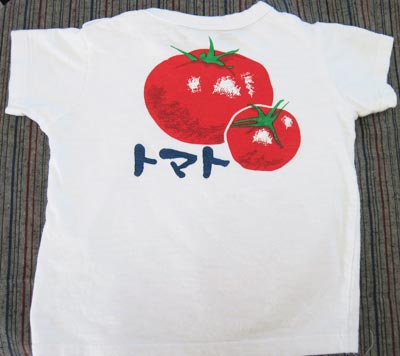
The name of the vegetable (or fruit?) in Japanese, and the pronunciation of the syllables that decorate this baby T-shirt.
Yesterday was the fourth Sunday in June, so the day of the local Japanese community's annual flea market. I didn't really need a baby T-shirt, but at $.25, the design was too adorable to resist. I'm hoping it will fit a neighbor's one-and-a-half year old, so I can take pictures of him wearing it as he toddles by. He is a fast one, but maybe I can manage to get a rear view—


Two labels sewn inside the collar—


Another item I couldn't manage to resist—

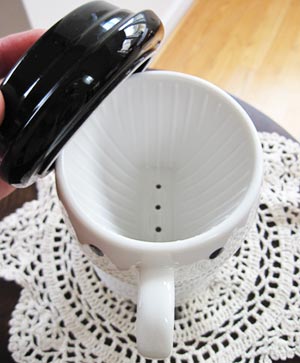
This truly is using your noggin!

There are always giveaway piles, too. I picked up some home-maker magazines—

"Heart and Hand" (above, left) is devoted to recipes and crafts. Here are directions for making gift envelopes from decorative papers—

I like the inexplicable prop here; this hand-made envelope will be just the thing for storing your Blue Eagle tickets!

More seriously, it's interesting how this real artifact can become a context-free prop in a Japanese magazine illustration. I can't find any background, but the image shows tickets printed "In full compliance"—
Globe [?] Ticket Company, Los Angeles
(According to teeny and partly blurred font in magazine image)
The L.A. event may have been held under of the auspices of the Federal Theatre Project, which promoted public performances throughout the country. The Library of Congress's FTP collection includes photos; posters for plays and other public performances are in the WPA poster collection. Though I've seen lots of archival images, I've never come across tickets that from one of these long-ago events.

It's history that is all but lost to popular knowledge. And a depressing, if unsurprising, thing: never try searching "NRA" without adding, Great Depression.

Thursday, December 25, 2014

Putting The"X" in Xmas

Japanese Christmas card, 1985—
Opening it reveals a popup scene: the priest, a sugary "traditional Japanese Christmas cake"...
... Surprise!
No, that's not Who it would seem; the cartoon represents this guy. This was during his early career, as TV's popular "Beat Takeshi"—
The targets of his jokes were often the socially vulnerable, including the elderly, the handicapped, the poor, children, women, the ugly and the stupid. Complaints to the broadcaster led to censorship of some of Kitano's jokes and the editing of offensive dialogue. Kitano confirmed in a video interview that he was forbidden to access the NHK studios for five years for having exposed his body during a show when it was totally forbidden.
The explanation I got for this card is that the cartoon portrays a recurring bit on the Takeshi show. When a character does something naughty, the star materializes on a cross, hollering,
"ダメ!" ["Damé!": bad], while holding his hands in an "X"(a Japanese signal for, "No!")

Well, Christianity is exotic to most Japanese, so related trappings serve well as comic props. All in good fun... Though I have always marvelled at the US corporate connection to Sanrio's card creation...

Saturday, October 18, 2014

You Say "Utopia," I Say "Me-Topia"

Lately I've been immersed in early twentieth century Japanese design history and artists. After a look at World War II textiles, via this book, I wanted to check out this title. Some of the same writers contributed to both books, and my latest read, The Brittle Decade, is a fascinating look at Japanese visual culture of the 1930s.

Elsewhere in my image browsing binge, I saw this earlier work—
Poster by Tsunetomi Kitano (1911)

Toward the top right, and just below "Kobe," the city's symbol appears on a flag seen above a flag of Japan.
This Art Nouveau beauty of a poster, publicizing a long-ago exposition at Kobe's port, reminded me of a later event there...
Other side—
"November 28 -30, 1984"

The dates should prove this event was indeed real, even though I didn't see it with my own eyes. Instead, I got the button at a Kobe trade fair I did attend, in exchange for a day's pay as an exotic foreign greeter. Compared to Meatpia, that event had a prosaic name, yet its products and atmosphere were a very odd mélange (and a story for some other time...)

Despite all alarming appearances, Japan Meatpia was (presumably) held to promote Kobe beef and other domestic products. A koala shows up here only because a vogue for the animal's image meant it was being used for every possible product or ad. And, one must always remember: there is no cognitive dissonance in Japanese marketing.

I like the button's use of a photo with red eye, which coordinates nicely with the 3-dimensional shadowed font.

The fair's name can also be explained, if in more than a few words. For starters, pia derives from utopia, and it's a routine display of Japan's love for creating odd neologisms from elements of English. Japanese automatically add an "o" between the two English consonants, when reading or saying this. Japanese syllable stress is mostly even, but pronunciation here is roughly, me-to-pía

Adding pia to names was also a marketing thing. I believe that was strongest in the Kobe area, and prompted by this—
Portopia '81 High Light [post card folder]
Images are from the nice collection of post cards and fair info here. Portopia opened March, 20 1981. Sponsored mainly by domestic corporations, it showcased current high tech to predict how Japanese would live in the future. The New York Times deemed the fair's site, Port Island, "perhaps the most impressive exhibit of all"—
The island is the result of a 15-year land reclamation project sponsored by the city government of Kobe, Japan's second busiest port. Nearly three billion cubic feet of earth were transported from hills near the city to the site in the harbor by a large conveyor belt and were poured into an area enclosed by a concrete breakwater. The result is an island about eight miles long, with housing and recreational and health facilities for a population of 20,000.
The fair certainly had its earnest side—
A third of the pavilions focus on energy or environmental issues, reflecting Japan's concern over its acute shortage of energy resources - the country must import more than 85 percent of its energy needs. The Sanyo Solarium, for example, is heated and air conditioned with solar panels, while a pavilion sponsored by the Kansai Power Company is devoted entirely to examining alternative energy sources. In one pavilion a fuel extracted from coral and the leaves of eucalyptus trees was used to operate a small motorcycle.

Several of the more spectacular pavilions highlight Japan's expertise in information technology. The Theme Pavilion, the centerpiece, houses the newly developed Hiovics, which stands for highly interactive optical visual information system, and an audience-participation video system. Visitors to the pavilion sit at individual computer booths from where their faces are projected onto a screen and their answers to a poll on Japanese ways of life are simultaneously tabulated.

At half-hour intervals, visitors are quizzed about their preferences in studying, eating and leisure activities. Based on their answers, the computer compiles a vision of the future that the respondents say they prefer. The results indicate that the Japanese want more time for sports and recreation.
The Times noted such futuristic wonders as "computers that compose music, dancing robots and hemispheric screens that project dazzling optical illusions." It was the largest high tech exposition since Osaka Expo '70.

Portopia lacked the international participation of 1970, being, as the Times said, "sponsored by the Japanese for the Japanese." Presentations combined technology, entertainment, and—what else?—pia
"Heart-Pia" Fun-With-Water Pavilion
Uncaptioned card (Heartpia and robot)
"Internationalism," Japanese-style, made appearances. Exotic and futuristic—
International Plaza
Exotic and quaint—
Souvenirs and food in the Avenue of Foreigners have their own exotic flavor
Another kind of exotic and foreign—
The Panda - The Popular Fellow from China
1981: Panda not yet eclipsed by the korara boomu ("koala boom"), or the mid-80s flirtation with erimaki tokage.

Seventy years earlier: a glimpse of the port, as seen between the Art Nouveau draperies—

In 1981 a Kobe Port Island Exhibition Association's brochure estimated a Port Island "daytime population of about 70,000 in 1985." Over two decades later—
Port Island distant view from Shisho-Zan mountain, Kobe, Japan
Photo: pinqui, 14 June 2008
Before Portopia's opening, an automated train system linking Downtown Kobe with Port Island was built. Along with the event's ultimate legacy of convention centers, hotels and an airport, the island was developed as a bedroom community of high-rise condos and suburban amenities.

Speaking of landfill... I occasionally visited friends who lived in one of those condos, the only times I went to Port Island. More often, some of my work commutes passed a development in the next town to the east. While it was much smaller and less glitzy than the Kobe site, it did have some rather surreal apartments rising from waterfront landfill. I've located only these small photos, and they don't quite capture how odd "Ashiya Newtown" looked—
Those are part of this interesting photo grouping.